A learning engine, not a learning app
You've read three articles about AI this week. What do you actually remember?
A personal knowledge graph that proves retention over time: spaced repetition, active recall, and AI grading.
See it work
Every node moves through four states. You watch it happen.
New
Added to your graph, not yet studied.
Fading
Due for review. The node pulses as memory decays.
Mastered
Recalled correctly. Retained and durable.
Lapsed
Overdue and slipping. Time to relearn.
How it works
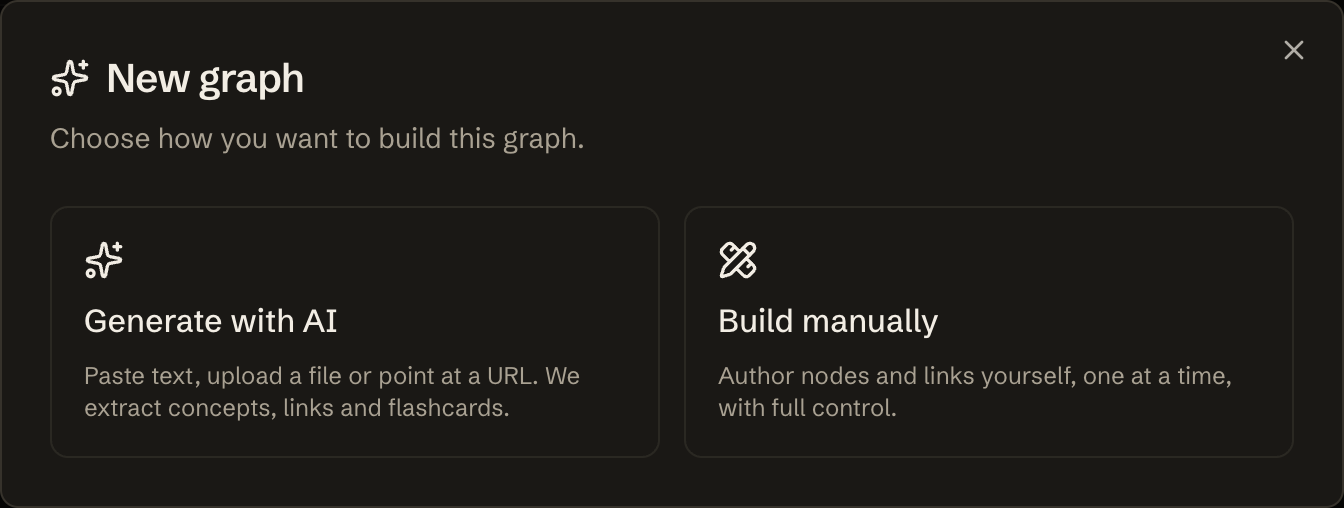
Add a source
Paste text, drop a URL, or upload a PDF. The engine extracts the concepts and links them into a graph.
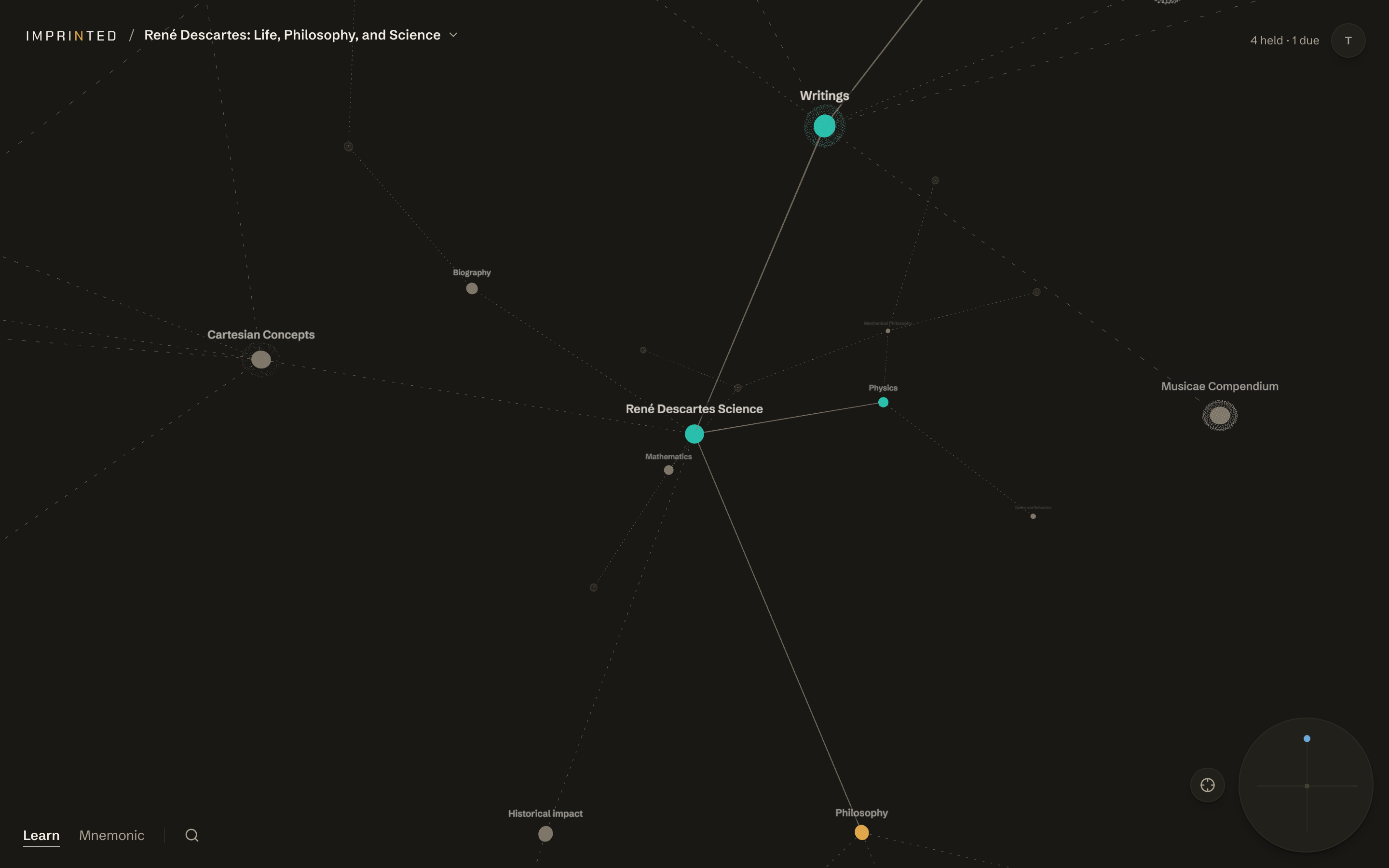
Read the map
Every concept is a node with an excerpt and flashcards. Colour is state: grey unread, amber fading, green held, red lapsed.
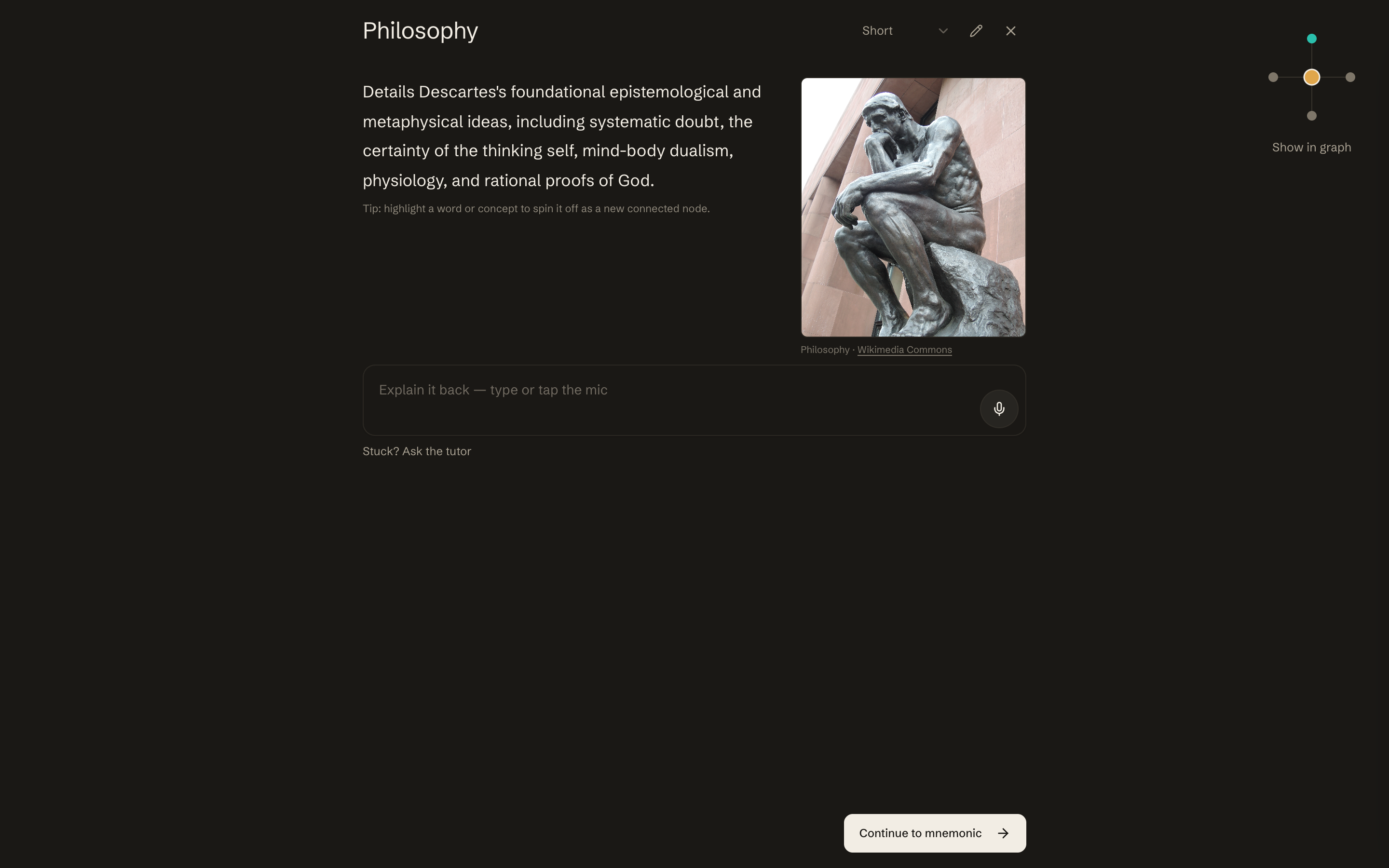
Recall, don't reread
Reviews arrive on the day you would forget. Free-text answers, graded by AI that names what is right, missing, and wrong.
Watch it hold
Weeks later the graph still tells the truth. Green stays green only while you keep recalling it.
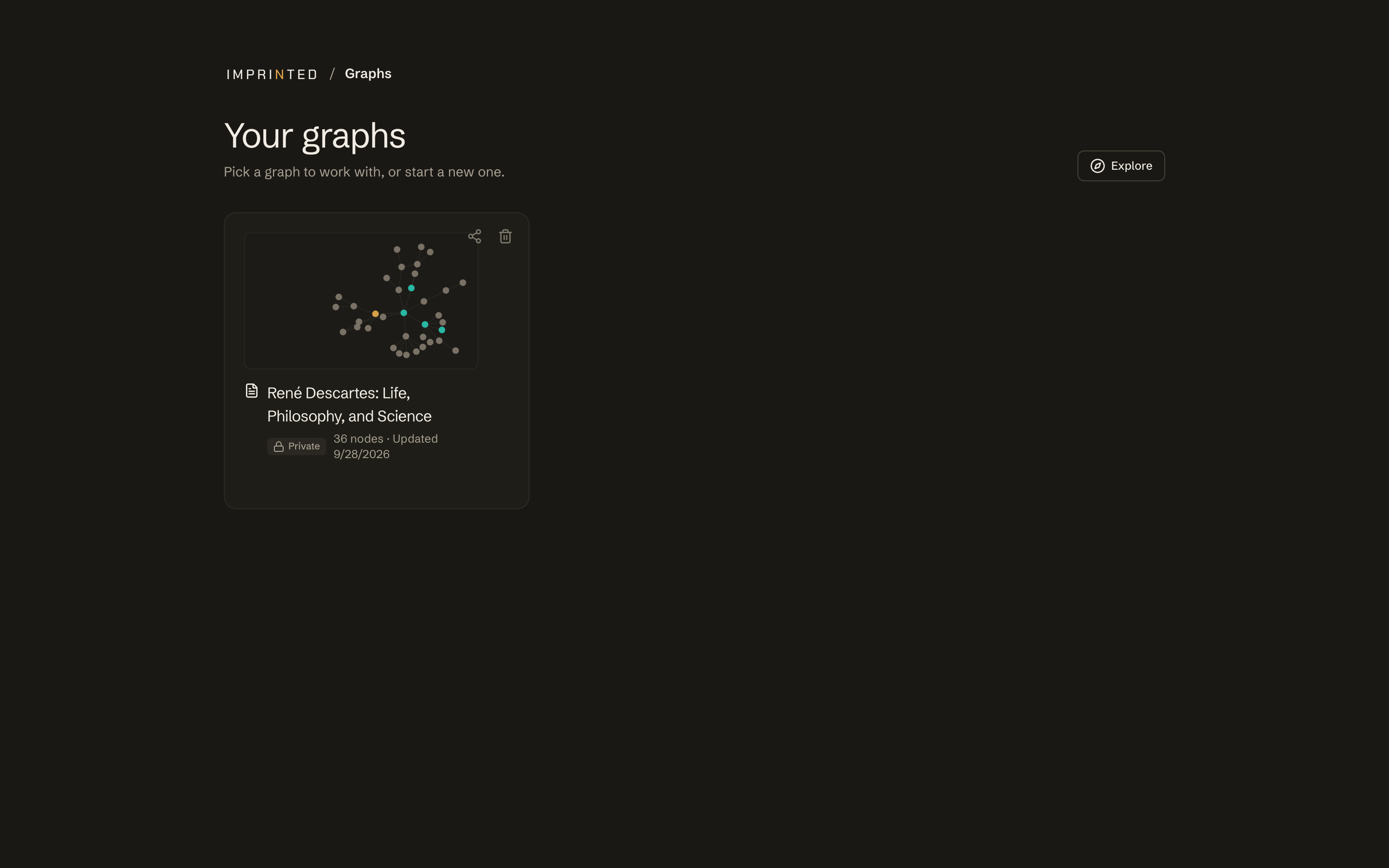
The graph is the instrument. Study, teach, and share on it.
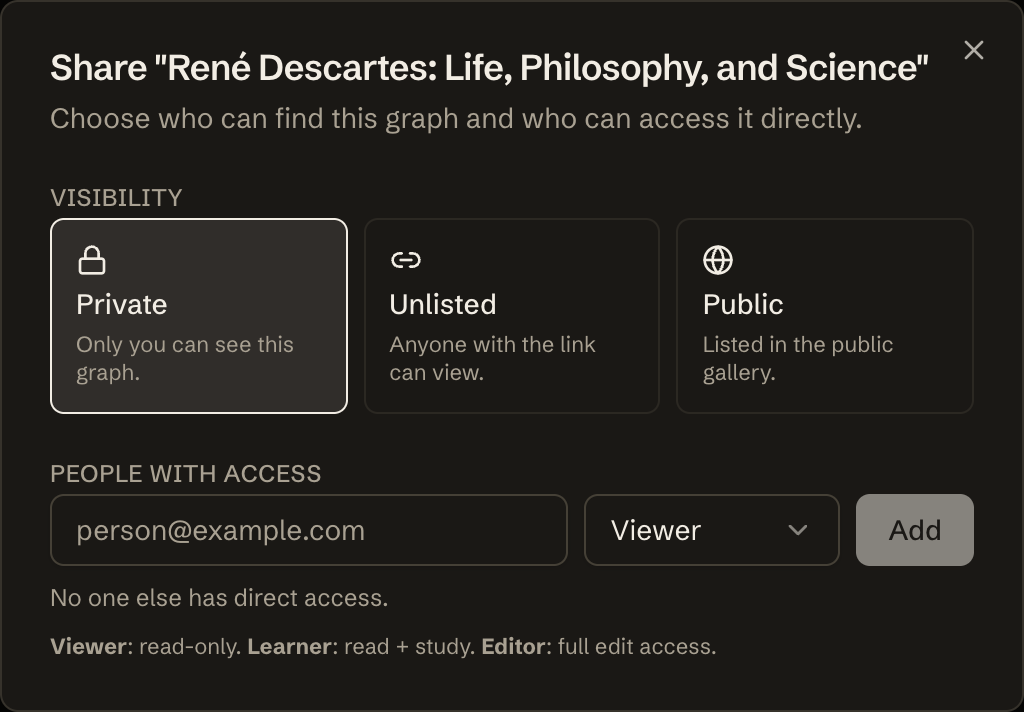
Publish public or unlisted
Unlisted gives you a private link. Public makes the graph discoverable, and any signed-in learner can copy it with one click.
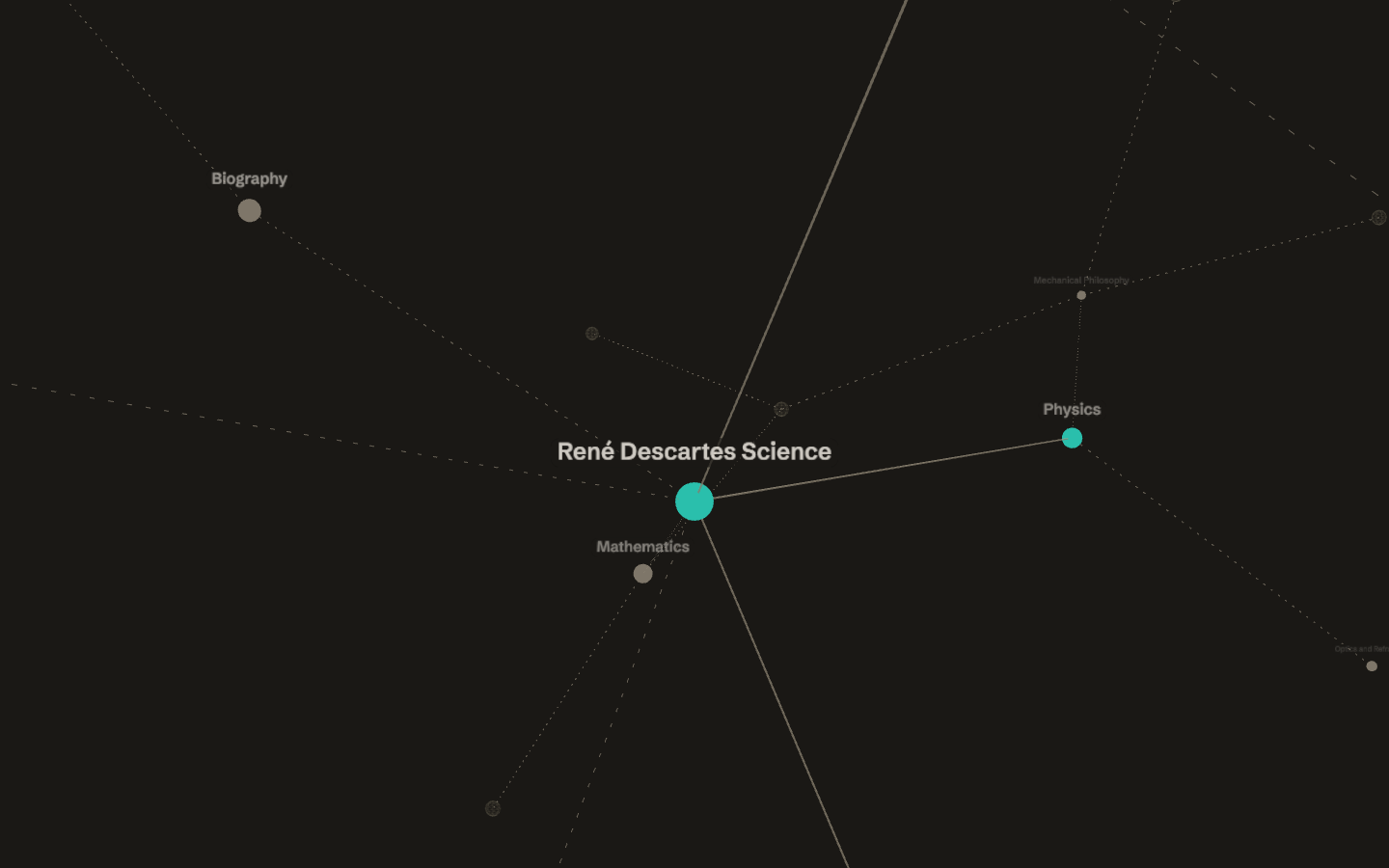
Turn any source into a graph
Paste text, drop a URL, or upload a file. The AI extracts concepts, links them, and seeds flashcards for every node.
A tutor anchored to your material
Ask the Tutor to explain, connect, or drill any node. Every answer cites your own sources and can mint a flashcard on the spot.
Practice mode for real recall
Mastered concepts unlock a three-step ladder: replicate, duplicate, iterate. Free-text answers, graded with feedback. No multiple choice.
Share graphs, keep control
Invite people as Viewer, Learner, or Editor. Learners keep their own progress; editors can extend the graph. Revoke access anytime.
Explore graphs from others
Browse public graphs from other learners. Fork one you like and let the engine track your own retention on top of it.
Built for durable expertise, not dopamine loops.
See what you actually know
The graph is the proof. Green nodes are recalled, amber is fading, red has lapsed. No dashboards, no vanity streaks.
Stop re-reading the same articles
Spaced repetition surfaces the concept you're about to forget, on the day you're about to forget it. Reviews take minutes, not hours.
Learn together, keep your own state
Share a graph as a Learner and your progress is yours. Same concepts, separate mastery. Study a colleague's graph without polluting theirs.
Prove the learning held
Weeks later the graph still tells the truth: which concepts stuck, which decayed, which you never actually held. Evidence, not assertions.
People who wanted the knowledge to stay.
“[Quote — three lines maximum. Voice carries.]”
“[Quote — three lines maximum. Voice carries.]”
“[Quote — three lines maximum. Voice carries.]”
Why we are building this
You read constantly. Most of it evaporates within days.
Mid-career professionals are reskilling for the next decade on articles, PDFs, documentation, and courses. The reading is not the problem. The problem is that nothing checks whether it stuck.
Learning apps answer that with streaks and confetti. We think adults deserve an instrument instead: one that turns what you already collect into concepts, schedules recall for the day you would forget, and shows the result as a map you can read at a glance.
The graph does not congratulate you. It tells you the truth about what you hold.
Questions
Start charting what you remember.
Join the waitlist and light your first star.